Twenty years ago, five Micronesian governments came together to make a groundbreaking commitment to protect their marine and terrestrial resources. The Micronesia Challenge has become a model for island-led conservation, helping establish more than 150 protected areas, mobilizing over $100 million for conservation, and inspiring similar initiatives around the world.
Today, the five governments are building on that legacy with a new commitment to effectively manage 100% of their ocean territory. At COP31, MCT, the Global Island Partnership (GLISPA), and partners are highlighting how the Challenge’s proven approach can be scaled to advance climate and ocean action worldwide, supported by financing that is island-led, fit for purpose, and built to last.
Join us for our 18 November high-level roundtable and other events, and follow updates throughout the conference.
High-Level Roundtable at COP31
Thursday, 18 November 2026
13:00–14:00 (Antalya time)
SDG Pavillion, COP31, Antalya
Anticipated speakers include H.E. Steven Victor, Palau Minister of Agriculture, Fisheries and the Environment; Hon. Elina P. Akinaga, FSM Secretary of Resources and Development; Hon. Julian Fraser RA, Deputy Premier of the British Virgin Islands; Hon. Marie-May Jeremie, Seychelles Minister for Environment, Climate, Energy and Natural Resources; and Munkhtuya (Tuya) Altangerel, Resident Representative of the UNDP Pacific Office in Fiji.
GLISPA, Micronesia Conservation Trust

Scan to Register
A roundtable on what islands have learned about financing resilience, from conservation trusts to ocean conservation commitments, and how climate and ocean finance can build on what already works.
Speakers will include Mae Bruton-Adams (Micronesia Conservation Trust), JinNam Hopotoa (Niue Ocean Wide Trust) and Jabal Hassanali (Island Trusts Alliance), with Professor Rolph Payet moderating.
An evening of conversation on Pacific island leadership in climate, biodiversity and ocean action. A short interview with a Pacific leader opens the session. Participants then rotate through three tables hosted by island practitioners. MCT hosts, sharing the Micronesia Challenge story of leadership that lasts.
12 November · Lessons on Financing for Resilience in SIDS
16 November · Partners in Resilience: Pacific Bright Spots Café
Island communities have always understood that climate, biodiversity, culture, and livelihoods are inseparable. The international system is only now catching up to what islands have long practiced.
The Micronesia Challenge has proven for twenty years that locally led conservation works. The commitment now is to ensure that proof is heard in every room where decisions about our oceans, our resources, and our future are made.
Partners from across the islands send their wishes.
Partners from across the islands send their wishes.
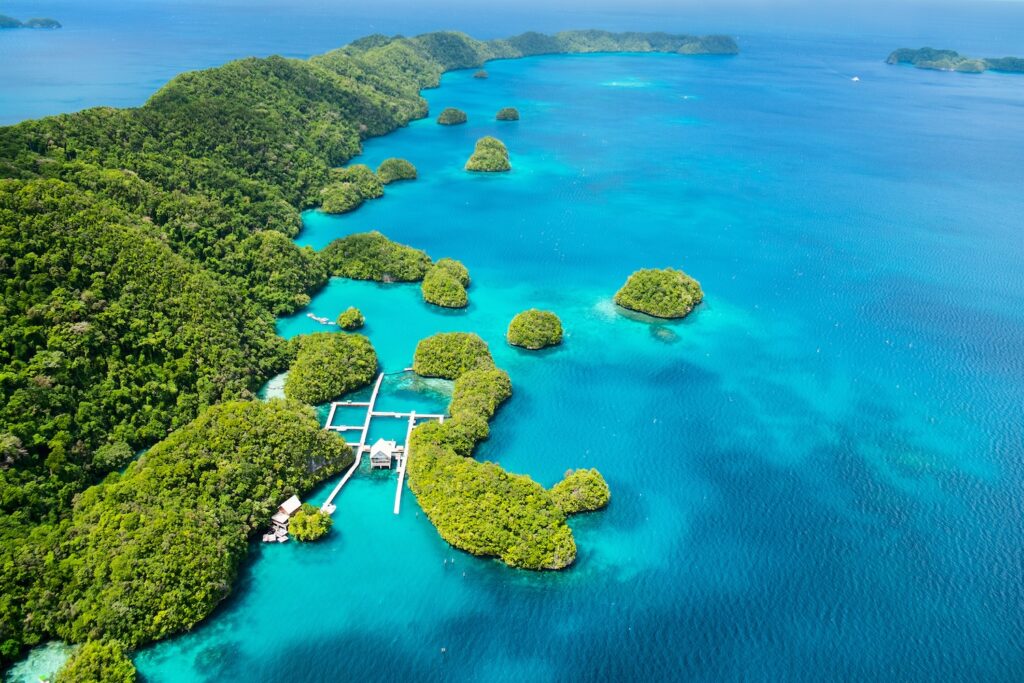
In March 2006, at the eighth Conference of the Parties to the Convention on Biological Diversity, the leaders of the Federated States of Micronesia, the Republic of Palau, the Republic of the Marshall Islands, Guam and the Commonwealth of the Northern Mariana Islands made a joint pledge: to conserve at least 30% of their near-shore marine resources and 20% of their terrestrial resources by 2020. Together, they span an ocean territory the size of the continental United States.
They declared that size didn’t matter and that bold action was owed regardless of population, land mass or available funds. It was a commitment made first to their own people, and it has held.
As its financing mechanism, MCT has helped mobilize more than $100 million for the Challenge.
The Micronesia Challenge showed what island governments can achieve when they act together.
Other regions took the idea and made it their own.
Through the Global Island Partnership, more than 35 island countries, territories and states have launched or strengthened commitments of their own.
Twenty years in, the Micronesia Challenge is not winding down. It is growing, in ambition and in who leads it.

MCT remains the Challenge’s financing mechanism, managing its endowment and raising and stewarding resources. Locally governed conservation trusts like MCT outlast project cycles and carry commitments over decades.
Meeting the Challenge’s new goals will require scaled, reliable funding. This need extends well beyond Micronesia: more than 90% of island and coastal countries include ocean measures in their latest national climate plans, yet more than 60% of these depend on finance or technical support to be carried out.
The opportunity at COP31 is to back what already works: long-term finance that reaches island-led institutions simply, quickly, predictably and at scale.

At the 2026 Micronesian Islands Forum, the five governments committed to effectively manage 100% of their ocean territory, while keeping the goal of 30% effective conservation of marine and terrestrial resources.

The Micronesia Challenge Regional Office (MCRO) is now an intergovernmental organization, based in the Republic of the Marshall Islands, with its first Executive Director. The five governments directly own the institution that coordinates their commitment, with the standing to engage other governments and international institutions as peers.
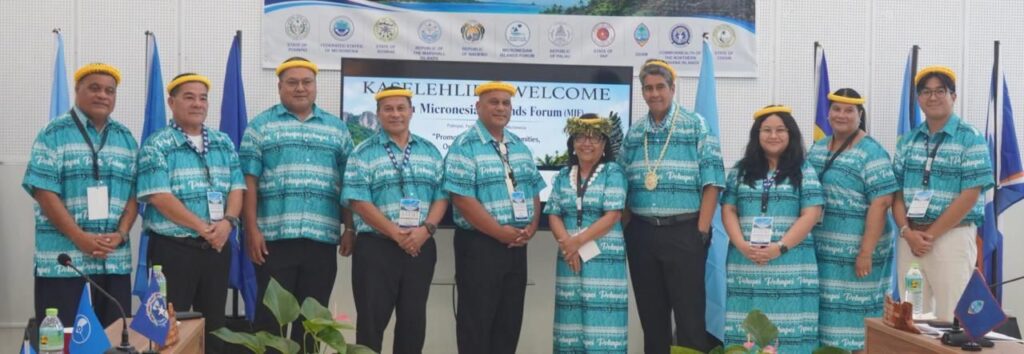
Celebrating twenty years of the Micronesia Challenge, what MCRO’s new status as an intergovernmental organization means, and why it matters at COP31.